Capsule Slip Rings Market Accelerates as Miniaturization and High-Speed Data Demands Reshape Rotary Transmission
Market Projected to Reach US$279 Million by 2032, Driven by Robotics, Medical Devices, and Industrial Automation
The global small capsule slip ring market is on a strong growth trajectory, with new industry data projecting expansion from US$176 million in 2025 to US$279 million by 2032—a compound annual growth rate of 6.8%. This momentum reflects a broader transformation in how engineers solve the challenge of transmitting power, signals, and data across rotating interfaces in increasingly compact and data-intensive systems.
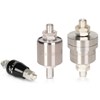
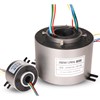
Capsule slip rings—compact electromechanical components that enable unrestrained 360° rotation while transferring electrical power and signals between stationary and rotating structures—have become indispensable across surveillance cameras, medical devices, robotics, automation equipment, and precision motion systems. The surge in demand is being propelled by miniaturized intelligent equipment, robot joints, and precision monitoring devices that require stable transmission in space-constrained environments.
Product Innovation Targets Extreme Environments
Recent product launches underscore the industry's push toward application-specific engineering. In May 2026, CENO Electronics introduced the CCN-15, a low-temperature capsule slip ring featuring 15 circuits with Ethernet and signal capability, specifically designed for drones, radar antennas, and sweeping robots operating in cold environments. The company emphasized that the compact structure and low torque of the unit minimize system burden while maintaining stable transmission without signal degradation.
Servotecnica USA has meanwhile expanded its SVTS A Series with a multi-wire brush option that increases service life by 5 to 10 times compared to traditional single-wire solutions. The series supports up to 56 circuits with gold-based alloy contacts in diameters ranging from 12.4mm to 25mm, targeting medical, robotics, and advanced industrial applications. "The SVTS A series is one of our core slip ring product lines, trusted and proven in industries including medical, robotics, advanced industrial, and packaging," said Fabio Bistoletti, CEO of Servotecnica.
Robotics Competition Validates Precision Slip Ring Performance
The practical demands of competitive robotics have provided a rigorous testing ground for capsule slip ring reliability. At ROBOCON 2026, China's premier university-level robotics contest that drew 297 teams from 133 universities, MOFLON supplied its MC330 miniature capsule slip ring to the Harbin Engineering University team for the robot's steering wheel system. The MC330's gold-on-gold contact technology delivered ultra-long continuous rotation service life with minimal contact resistance fluctuation, while the compact form factor minimized load on the steering mechanism. The slip ring's ability to eliminate cable tangling during high-speed pivoting proved decisive in competition rounds where stable power and signal transmission directly impacted match outcomes.
Wireless and High-Speed Data Transmission Emerge as Key Trends
At AUTOMATE 2026 in the United States, NBG unveiled a capacitive coupling wireless transmission slip ring that eliminates mechanical wear entirely, offering bandwidth from 800 Mbit/s to 10 Gbit/s for advanced industrial automation applications. The non-contact design delivers maintenance-free operation, low latency, and robust performance in demanding environments—representing what the company described as "a significant step forward in non-contact rotary transmission".
This aligns with broader industry trends identified in market research, which highlight high-speed data transmission, wireless and non-contact slip rings, and hybrid designs integrating power, multiple data signals, and even fluids or gases into single units. The demand for transmitting high-bandwidth Ethernet and fiber optic signals through rotating interfaces continues to grow, particularly in advanced robotics, surveillance systems, and medical imaging where real-time data transfer is paramount.
Medical and High-Reliability Applications Drive Customization
The medical device sector remains a critical growth engine for capsule slip ring technology. JINPAT's LPM-04A Micro Capsule Slip Ring, designed for rehabilitation training robots, offers an IP68 protection rating, rotation speeds up to 2,000 RPM, and a lifespan of up to 30 million revolutions—specifications tailored to healthcare environments where durability and reliability are non-negotiable. For CT scanners and other rotational medical imaging equipment, JINPAT has developed the LPC/LPM-YS series with gold-on-gold contacts and design speeds reaching 2,000 RPM, exceeding the 300 RPM limit of standard slip rings.
The competitive landscape remains concentrated, with Moog and Schleifring together accounting for approximately 41% of the global slip ring market, while small capsule products represent more than 39% of total product share. Asia-Pacific stands as the largest regional market, holding about 37% share.
Outlook
As industrial automation, robotics, and medical technology continue to demand smaller, faster, and more reliable rotary transmission solutions, the capsule slip ring market appears well-positioned for sustained expansion. The convergence of miniaturization, high-speed data capability, and environmental resilience is reshaping product development priorities across the industry—transforming what was once a purely mechanical component into a sophisticated enabler of next-generation intelligent systems.